
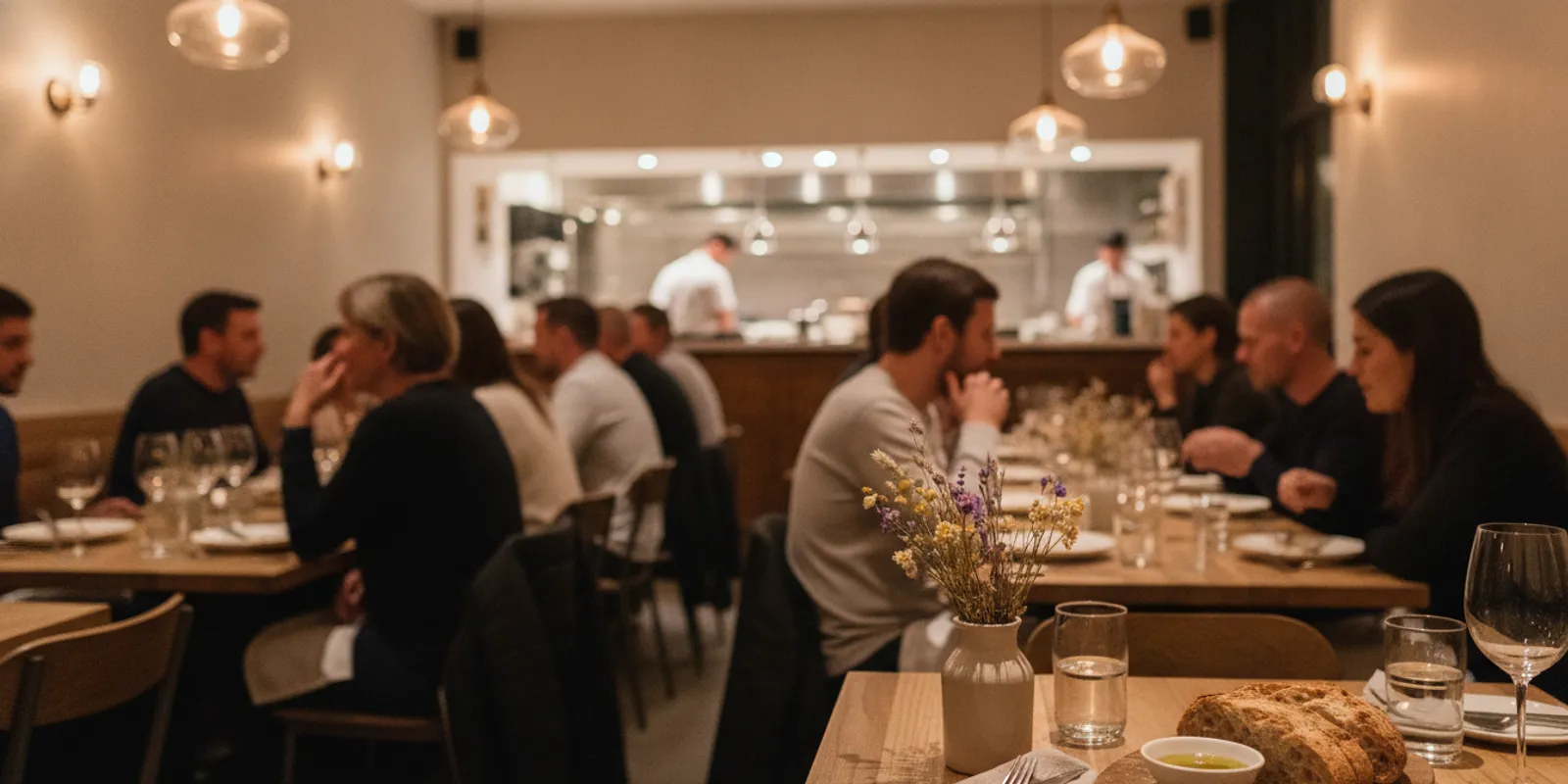
A restaurant advertising media buy can put a message in front of people while they dine, wait, or spend time with friends and family. The right placements depend on more than venue count: buyers should compare audience context, format, geographic coverage, and the practical details of delivery.
Discuss restaurant advertising options
What makes a restaurant placement a good fit?
Start with the campaign objective and the audience you need to reach. Restaurant media can be useful when the message suits a meal occasion, a local community, or a longer visit. But a restaurant is not a single, uniform environment. A quick-service location, a neighborhood diner, and a full-service restaurant can have different visit patterns, customer mixes, and opportunities for attention.
Define the audience in terms that help you make a venue decision. Consider geography, age or life stage where relevant, dining occasion, and whether you need local frequency or broad reach. Then ask how the proposed venue set supports that definition. Avoid assuming a venue category automatically delivers a specific demographic; request the rationale for the proposed locations and how they map to your audience.
Context matters as much as who may be present. A family-oriented message may suit locations where group dining is common. A neighborhood service may be better served by restaurants near its service area. For a promotion tied to an event or product, consider whether the meal occasion and surrounding area align with the moment you want to reach.
A useful brief should connect the venue decision to a broader marketing plan rather than treating restaurant inventory as an isolated tactic. The Penn State restaurant marketing guide discusses the role of marketing and sales strategy in a restaurant business plan. For an advertising buyer, the practical lesson is to define the business objective and intended audience before judging whether a particular setting belongs in the mix.
Which restaurant environments should buyers compare?
Build a shortlist that reflects the audience and campaign geography, rather than selecting venues only because they are familiar. A practical evaluation may include:
- Service style: quick-service, casual dining, full-service, or another relevant format.
- Visit occasion: routine meals, family outings, social gatherings, or a specific local occasion.
- Location: neighborhood, retail district, commuter corridor, or proximity to a campaign destination.
- Expected exposure opportunity: where a guest may encounter a placement and whether it is visible without interrupting service.
- Fit and suitability: whether the setting aligns with the brand, message, and any audience sensitivities.
Ask for a clear description of the proposed venues and selection logic. When a campaign spans multiple markets, request market-level detail rather than relying on a national total alone. The buyer should be able to see where inventory is concentrated and where the plan has gaps.
Restaurants can also sit within a broader place-based plan. For instance, a campaign may pair restaurant placements with pharmacy advertising or library placements when those environments support a distinct audience or message. Each added venue category should have a clear role; a longer venue list is not automatically a stronger plan.
How should buyers evaluate audience context?
Audience context describes what people are doing, why they are in the setting, and how the message fits that moment. It is different from a simple demographic label. A restaurant visitor may be alone, with family, meeting colleagues, waiting for an order, or enjoying a longer meal. Those situations affect how much attention a placement can reasonably earn and what kind of creative is appropriate.
Ask the media partner to explain the context for each proposed environment. Useful questions include:
- What brings people to the location?
- How long might a typical visit last, and where are waiting or dwell moments?
- Is the audience primarily local, destination-based, or a mix?
- Does the placement reach one person, a group, or both?
- What competing visual distractions are present?
- Does the message require immediate action, or is repeated awareness the goal?
Do not turn an estimated dwell opportunity into a promise of attention. People may be focused on conversation, food, service, or their phones. A well-reasoned plan acknowledges those conditions and uses them to choose a suitable format and message. The strongest rationale explains not only who may be present, but why that setting is relevant to the campaign.
How should buyers evaluate formats?
Format selection affects visibility, creative requirements, and the experience of the venue. A tabletop piece may be encountered at close range during a meal. A wall-mounted display or other in-venue placement may be seen from farther away or in a different part of the visit. The best choice depends on the available venue inventory and the intended moment of exposure.
Compare formats by asking practical questions:
- Where exactly will the placement appear?
- Can guests see it naturally from the relevant seating or waiting area?
- What are its dimensions, orientation, and material?
- How often will creative be refreshed, if at all?
- What production, installation, or venue approvals are included?
- How will placement be documented after installation?
Creative should be easy to understand in the setting. Use a concise message, a clear visual hierarchy, and a call to action appropriate to the available viewing time. A tabletop format may allow for more detail than a glance-based display, but it still competes with conversation, menus, and the meal. Keep the primary message prominent and test whether it remains legible at the expected viewing distance.
Review the physical constraints before approving artwork. Confirm safe placement, venue rules, material durability, and any accessibility considerations. A format that appears attractive in a mockup may not work in the actual space, so request specifications and, when available, examples of how similar placements look in context. All Points Media describes table tent advertising as one possible restaurant-related format; buyers should still confirm which formats fit their selected locations.
How can buyers compare market coverage?
Coverage is not simply a count of participating restaurants. Buyers should compare the locations to the campaign's geographic priorities. For a local campaign, evaluate neighborhood presence and proximity to the intended trade area. For a multi-market campaign, look at the consistency of coverage from city to city and whether the plan reaches the markets that matter most.
Request a location-level or market-level schedule with enough information to evaluate the plan. Depending on the proposal, useful fields may include venue name or type, city or market, format, quantity, flight dates, and placement status. If venue identities cannot be shared before confirmation, ask what detail can be provided and when final placements will be verified.
Use a consistent comparison across proposals. A plan with fewer but better-aligned locations may be more useful than a larger list with weak geographic fit. Check for concentrated inventory in a few markets, uncovered priority areas, and differences in placement format. Also clarify whether the quoted venue count means proposed, contracted, or installed placements.
| What to compare | Questions for the buyer | Why it matters |
|---|---|---|
| Audience context | What occasions and communities do these venues represent? | Tests whether the environment supports the campaign goal. |
| Format | Where will the ad appear, and what will guests see? | Connects creative and visibility to the actual visit. |
| Market coverage | Which priority markets and neighborhoods are included? | Reveals gaps and uneven distribution. |
| Delivery evidence | What confirms installation and ongoing placement? | Clarifies how the delivered campaign can be reviewed. |
| Execution scope | Who handles production, installation, and issue resolution? | Shows the operational work behind the media proposal. |
How should buyers compare cost and scope?
Price should be reviewed alongside the inventory and work included. Two proposals may show similar venue counts while offering different formats, market mixes, production responsibilities, installation services, or reporting. Comparing only the total can hide important differences in what the client will receive.
Separate the proposal into understandable components. Ask whether the quoted amount includes media placement, creative preparation, printing or other production, shipping, installation, campaign management, make-good handling, and reporting. If a cost is provisional, label it as an assumption and identify what causes it to change.
It can help to request good, better, and best options that change one meaningful variable at a time. For example, one option might prioritize a smaller set of priority markets, another might broaden coverage, and a third might add a different format. This makes the tradeoff easier to explain to a client than a series of unrelated totals.
Do not infer performance from a low unit price. A lower apparent cost may reflect a different placement, shorter flight, narrower market distribution, or fewer execution services. Match each option against the campaign objective, then document why the selected scope is appropriate.
What should the proposal say about execution?
A useful proposal explains not only where ads may run, but how the campaign will move from approval to verified placement. Ask who coordinates with venues, prepares or receives creative, manages production, handles installation, and shares status updates. If different vendors are involved, define each party's responsibility and escalation path.
Clarify timing at each step. Establish when artwork is due, how long approvals may take, when installation is expected, and how the team will communicate schedule changes. Restaurants operate around service needs, so installation plans should account for venue coordination and avoid disrupting operations.
Documentation should be discussed before the campaign begins. Ask what proof is supplied, such as installation photos or placement records, how exceptions are reported, and how corrections are handled. A clear process helps both buyer and client understand what was delivered without confusing a planned placement with a completed one.
All Points Media presents itself as a turnkey place-based media partner, with services spanning venue procurement, creative production, installation, campaign management, and reporting. Buyers can review the company's place-based advertising overview and production services when assessing which execution elements fit a proposed program. Confirm the specific scope and deliverables in the campaign proposal.
How do you build a practical restaurant media brief?
A concise brief gives a media partner enough direction to recommend relevant placements. Include:
- Campaign purpose: What should the campaign help the brand communicate or prompt?
- Audience: Who is the priority audience, and what context makes reaching them relevant?
- Geography: List priority markets, neighborhoods, or areas to include or exclude.
- Timing: Provide the intended start and end dates and any important dates or seasonality.
- Creative needs: Identify available assets, required formats, and approval steps.
- Evaluation needs: State what delivery detail, documentation, or reporting the client needs.
Then ask the media partner to explain the recommendation in those terms. A sound response should connect venue choices to the brief, identify assumptions, outline format and market coverage, and make delivery responsibilities visible. If the recommendation does not answer a key requirement, resolve that before comparing cost or approving artwork.
What should buyers plan for creative and approvals?
Restaurant placements often require creative that works within a physical environment and a fixed production schedule. Begin with the format specifications, not a finished design. Confirm dimensions, safe areas, file types, color requirements, material choices, and whether the venue or media partner must approve the artwork.
Build time for review into the media schedule. The brand, agency, venue, printer, and installation team may each have a role. A short approval checklist can prevent avoidable delays:
- Confirm the offer, dates, and call to action.
- Check that required legal or brand language is present.
- Review legibility at the expected viewing distance.
- Verify that the design fits the approved format and material.
- Record the final file version and approval date.
- Define who may authorize a change after production begins.
Keep the restaurant experience in mind. Creative should support the venue rather than obstruct service, create confusion, or depend on a level of attention the setting cannot provide. If a message needs more explanation, consider whether a simple next step, landing page, or short offer can carry the detail more effectively.
What questions belong in a buyer's checklist?
Use these questions during proposal review:
- What audience and occasion does each restaurant type help reach?
- How were locations selected for the stated target geography?
- What formats are available, and where will each be placed?
- Are the venue counts proposed, confirmed, or installed?
- What is included in production, installation, and campaign management?
- How are placement exceptions documented and addressed?
- What does the final proof-of-performance package contain?
- Which details remain assumptions until venues are confirmed?
- What creative specifications and approval deadlines apply?
- How will the plan be adjusted if a priority venue becomes unavailable?
For examples of venue-specific programs, buyers can also review All Points Media's project archive and its bars and restaurants project page. Use examples to understand the kinds of environments represented, while treating each campaign proposal on its own terms.
Frequently asked questions
Is restaurant advertising right for every campaign?
No. It is most relevant when the audience, location, and meal-time context support the campaign objective. Compare it with other environments and use it only when it fills a clear role in the plan.
Should buyers prioritize the number of restaurants or the quality of fit?
Prioritize fit with the target audience and geography. Venue counts can help describe scale, but they do not show whether locations align with priority markets or provide the intended context.
What information should buyers request about placements?
Ask for the proposed venue type, market, format, flight dates, status, and the method used to document installation. The exact detail available may vary, so clarify what will be supplied and when.
Can restaurant placements be combined with other venue types?
Yes, if each setting supports a specific audience or campaign need. Treat each category as a separate part of the media rationale rather than combining venues simply to increase the total.
How early should a buyer start planning?
Start early enough to confirm inventory, approve creative, produce materials, coordinate with venues, and allow for installation before the intended flight. The required lead time depends on the scope and format, so request a schedule with milestone dates.
Share your campaign objectives
Ready to assess restaurant placements?
Compare the audience context, format, coverage, cost, and execution plan against the brief before you recommend a restaurant advertising media buy to your client.