
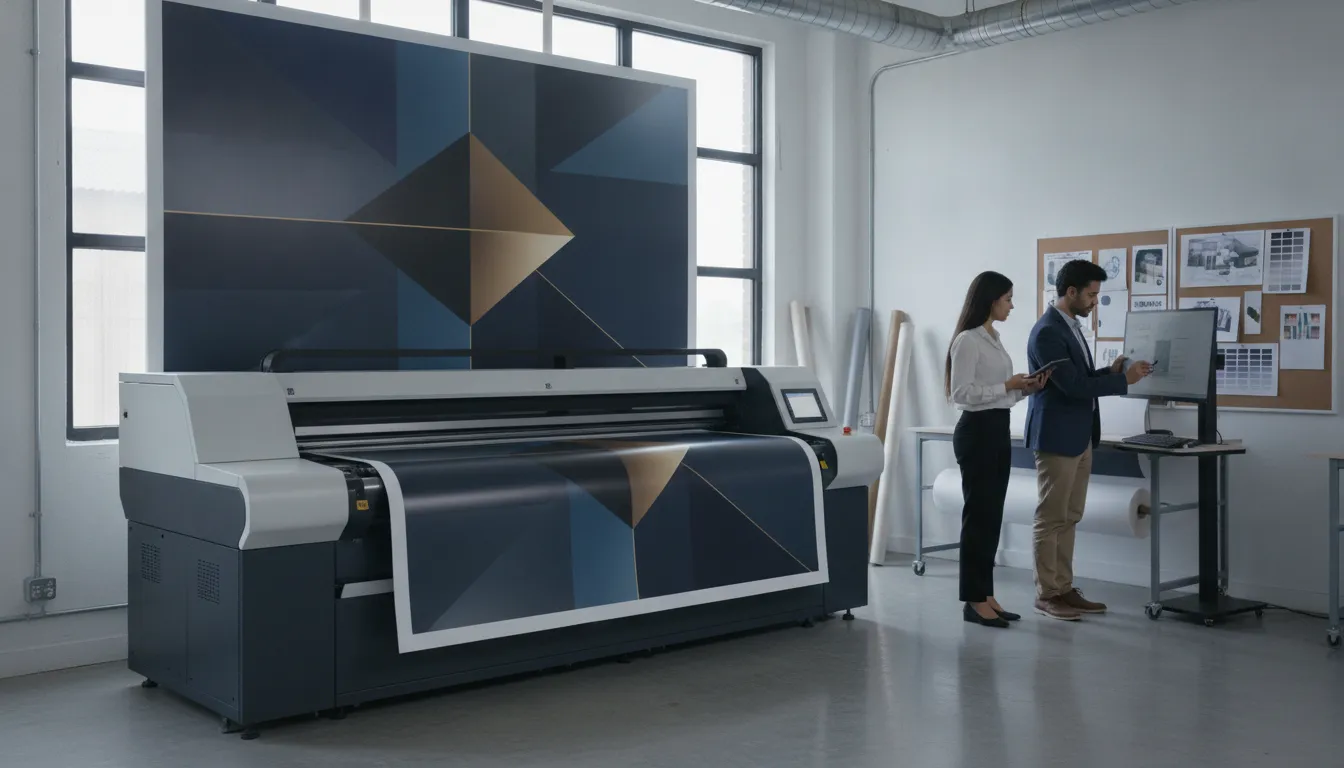
Custom advertising print production turns an approved campaign idea into physical media that can work in real venues, not just on a screen. For media buyers, that means more than selecting a printer. It means coordinating formats, materials, venue requirements, quality control, packaging, distribution, and installation readiness so the finished campaign reaches the right locations in the right condition.
What is custom advertising print production?
Custom advertising print production is the coordinated process of converting campaign creative into physical advertising materials for specific venues, audiences, markets, and installation conditions. It can include production planning, format selection, proofing, printing, finishing, inspection, packing, distribution, and coordination with the teams that place the work in the field.
All Points Media treats print production as part of the media plan because a printed asset has to function in the environment where people encounter it. A poster in a healthcare waiting area, a table tent in a restaurant, a floor graphic in a retail setting, and a large-format display in a recreation venue do not share the same viewing distance, material needs, mounting method, or exposure conditions.
That difference separates custom advertising print production from a transactional print order. A transactional order begins with a quantity and a file. A campaign-ready plan begins with the audience, venue mix, geography, flight dates, message hierarchy, and physical requirements. The output is a set of materials that can be identified, routed, installed, maintained, and documented against the media plan.
For buyers managing place-based media, this distinction protects the work between creative approval and campaign launch. Production decisions can affect legibility, durability, installation timing, brand consistency, and the ability to replace a damaged or misrouted piece. Bringing those decisions into the campaign plan early reduces avoidable surprises later.
Why does place-based media require a custom print plan?
Place-based media requires a custom print plan because each venue introduces different dimensions, sightlines, surfaces, materials, access rules, and audience behaviors. The production approach should reflect the actual network, not an assumed standard order. Venue-aware planning helps a campaign remain clear, durable, consistent, and practical across markets.
Place-based campaigns are built around real environments. People may see a message while waiting, exercising, dining, shopping, receiving care, or moving through a community venue. The physical context changes how much time the audience has, how far away the message is, what competes for attention, and whether the material needs to withstand repeated contact.
All Points Media's place-based media campaigns connect the venue strategy to campaign execution. That connection gives the production team useful information before artwork is finalized:
- Audience and behavior: whether the placement serves a quick-glance moment, a high-dwell environment, or a point-of-action opportunity.
- Venue conditions: available wall, window, floor, counter, or display surfaces and any operator requirements.
- Geographic scope: whether the program needs local, regional, or national fulfillment and version control.
- Campaign timing: the launch window, flight length, seasonal relevance, and removal or replacement requirements.
- Message hierarchy: what the audience must understand first and what can be secondary in the physical setting.
Without this context, a creative file can be technically complete but operationally incomplete. The dimensions may be wrong for the selected holder. The material may be poorly suited to the surface. The packaging may not identify the destination clearly. Or the production schedule may leave no practical time for inspection before installation.
What should custom advertising print production include?
A complete custom advertising print production scope should define the asset formats, materials, dimensions, quantities, finishing, proofing, inspection, packaging, distribution, installation coordination, and replacement process. It should also identify approval owners and version-control rules, so every team knows what is being produced, where it goes, and which file is final.
The exact scope depends on the campaign, but media buyers should expect the production brief to answer practical questions before a press run begins. A clear scope typically includes the following components.
Format and application planning
Start with the placement, not the printer's menu. The team should map each physical format to the selected venue and the way the audience encounters it. Possible applications can include posters, table tents, window and door graphics, wall-mounted displays, floor graphics, banners, specialty signage, or fabricated elements. The right option depends on the available surface, viewing distance, mounting method, venue rules, and campaign objective.
Material and finishing decisions
Paper, adhesive vinyl, fabric, rigid board, and other substrates perform differently during handling, shipping, installation, and the campaign flight. Finishing can affect appearance, rigidity, edge protection, cleanability, and how a piece is mounted. A production partner should explain the tradeoffs in plain operational terms rather than treating material selection as an afterthought.
Artwork preparation and proofing
Artwork preparation should confirm dimensions, bleed, safe areas, color requirements, image resolution, copy accuracy, logos, required legal language, and final destination details. A proof or representative sample can help the buyer review the physical result before the full quantity is produced, especially when a new material, format, or installation method is involved.
Quality control
Quality control should review more than whether a file opened successfully. It should cover color and contrast, trim and finishing, image quality, material consistency, version accuracy, quantity, and visible defects. For a multi-market campaign, inspection also needs to protect consistency across batches so that the approved brand system does not drift from one production run to another.
Packaging and distribution
Printed materials need to be grouped, labeled, protected, and routed to the correct market or venue. The distribution plan should make it clear which materials belong together and what the installation team needs to know when the package arrives. This is particularly important when one campaign uses multiple formats or approved creative variations.
Installation readiness and documentation
Production should end with materials that are ready for the field, not with a shipment that another team must interpret. Installation coordination can include access notes, venue contacts, placement instructions, timing, escalation paths, removal requirements, and the evidence needed after the work is installed. A clear documentation plan helps the buyer distinguish what was produced, what was delivered, and what was ultimately placed.
These components are why a production and installation partner can be more useful than a printer working in isolation. The production plan stays connected to the campaign's physical execution instead of becoming an unrelated order.
How does the print production workflow work?
A dependable print production workflow starts with the audience and venue brief, then moves through format planning, specification approval, proofing, production, inspection, distribution, and installation coordination. The final step is delivery documentation. Each checkpoint gives media buyers a chance to resolve a practical issue before it affects a live campaign.
1. Align production with the media brief
All Points Media begins with the campaign requirements: who needs to be reached, where the campaign will run, which venues are involved, what the audience should do next, and when the materials need to be live. This establishes whether the work needs a fast-glance hierarchy, a more detailed high-dwell treatment, a durable surface application, or a coordinated mix of formats.
2. Build a format and specification matrix
Next, map each placement to its dimensions, surface, material, quantity, finishing, installation method, and delivery destination. A specification matrix gives media, creative, production, venue, and installation teams one shared reference. It also surfaces missing information before a file enters production.
3. Review artwork and approve the physical approach
At this stage, the team checks whether the creative works within the selected format and whether any adaptation is needed. Confirm the master file, approved variations, color expectations, bleed and safe areas, finishing, and the person authorized to approve the proof. A controlled approval path helps prevent competing versions from moving forward.
4. Produce and inspect the materials
Once specifications and artwork are approved, produce the materials and complete the agreed quality checks. The inspection should be appropriate to the campaign's risk, format, and scale. Review a representative sample when a new substrate or application is being introduced, and confirm that the final quantities and versions match the placement list.
5. Pack, route, install, and document
Finally, label and route materials to the correct markets or venues, coordinate access and installation timing, and record the agreed proof of execution. If a piece is damaged, delayed, or unsuitable for a location, the exception should have an owner and a defined resolution path. That is how production becomes a managed campaign function rather than a one-time shipment.
Which print formats fit place-based advertising?
The best print format depends on the venue surface, viewing distance, audience behavior, campaign duration, and installation conditions. Place-based campaigns may use posters, table tents, window graphics, wall displays, floor graphics, banners, or custom physical elements. The format should serve the environment and message, not simply follow a standard inventory list.
Format selection is an audience and operations decision. A message intended for a person seated in a waiting area can carry more detail than one viewed while walking through a corridor. A floor graphic needs a different material and safety approach than a wall poster. A window application may need to preserve visibility from one side or both. A multi-market rollout may require the same concept to work across several venue conditions.
Common considerations include:
| Placement context | Production questions to answer |
|---|---|
| Wall or poster display | What size, holder, paper or board stock, viewing distance, and mounting method fit the location? |
| Table or counter placement | What footprint, fold, finish, and message length work during a high-dwell interaction? |
| Window or door graphic | Which surface, adhesive, visibility, installation, and removal requirements apply? |
| Floor application | What material, finish, slip-resistance, traffic exposure, and maintenance conditions must be considered? |
| Large-format or specialty display | How will the piece be fabricated, transported, assembled, secured, and maintained? |
A buyer does not need to select every possible format. The goal is to build a disciplined production system around the audience journey and venue network. Reviewing venue networks early can help the campaign team understand why a flexible production approach matters when placements span different real-world environments.
How should media buyers evaluate a print production partner?
Evaluate a print production partner by asking how it connects the creative brief to venue requirements, physical output, fulfillment, installation, and proof of execution. Look for clear ownership, repeatable quality checks, transparent assumptions, version control, geographic capacity, and a process for resolving exceptions before they disrupt the campaign.
Media buyers should request a workflow, not just a list of equipment or services. The most useful questions reveal who owns each decision and what evidence is created along the way:
- How does the production team use the audience, venue, and placement plan to recommend formats?
- Which production, fabrication, finishing, inspection, and fulfillment steps are handled directly?
- How are master creative files and market-specific versions controlled after approval?
- What is checked before the full quantity is produced?
- How are materials labeled, packaged, shipped, and matched to the placement list?
- Who coordinates venue access, installation timing, damaged materials, and replacements?
- What proof-of-performance or proof-of-execution documentation is provided?
- How are late creative changes handled before production or installation?
All Points Media connects APM PrintWorks production capabilities with campaign management and nationwide installation through AP Installations. That integrated model is designed for buyers who want production decisions to reflect the actual place-based network, rather than coordinating a printer, logistics provider, and field team as unrelated vendors.
How can production stay consistent across markets?
Multi-market consistency comes from a controlled production system, not from making every location identical. Define the master creative, approved adaptations, format rules, material standards, quantities, labeling, inspection points, and installation evidence. A coordinated partner can preserve brand consistency while adapting the physical execution to each market and venue.
National and regional campaigns introduce variation by design. Markets can have different venue categories, quantities, delivery windows, surfaces, access conditions, and local requirements. The production plan should make those differences visible while protecting what must remain consistent, such as the core message, brand treatment, legal language, and approved call to action.
Version control is one of the most important safeguards. A changed phone number, URL, market reference, or required disclaimer can affect files already packed or shipped. The production team should know which version is final, which destinations receive it, what has already been released, and how a replacement will be handled if the change arrives late.
Consistency also depends on feedback from the field. If a material is difficult to install, a format is too dense for the viewing distance, or a surface does not hold up as expected, those observations should improve the next production decision. This is one advantage of connecting production, installation, and campaign management under one accountable operating plan.
Frequently asked questions about custom advertising print production
Custom advertising print production works best when it is planned alongside audience strategy, venue selection, creative approval, and installation. Buyers should confirm the physical formats, materials, quality checks, fulfillment process, version control, and delivery evidence before approving a campaign so production supports the media plan from launch through closeout.
What is the difference between custom advertising print production and ordinary commercial printing?
Ordinary commercial printing often starts with a finished file, quantity, and delivery address. Custom advertising print production adds the campaign context: audience, venue, format, surface, viewing conditions, installation method, market variation, and proof of execution. The work is planned around how the printed material will function in a real advertising environment.
Can print production and installation be coordinated through one partner?
Yes. All Points Media can connect production planning with installation coordination as part of a turnkey place-based media campaign. The exact scope depends on the selected venues, formats, markets, timing, and campaign requirements, but the benefit is a clearer operating plan from approved artwork through field delivery.
What artwork information is needed before production begins?
The production brief should identify final dimensions, bleed and safe areas, color requirements, image resolution, copy and logo approvals, required legal language, quantities, versions, material, finishing, delivery destinations, installation timing, and the approval owner. The exact requirements vary by format and venue, so the production team should confirm them before the file is released.
How do I plan print production for a multi-market place-based campaign?
Start with the placement list and group requirements by market, venue category, format, quantity, and installation condition. Then define the master creative, approved adaptations, labeling, quality-control checkpoints, distribution plan, exception process, and proof-of-execution requirements. A coordinated campaign partner can help connect those details to the audience and network strategy.