
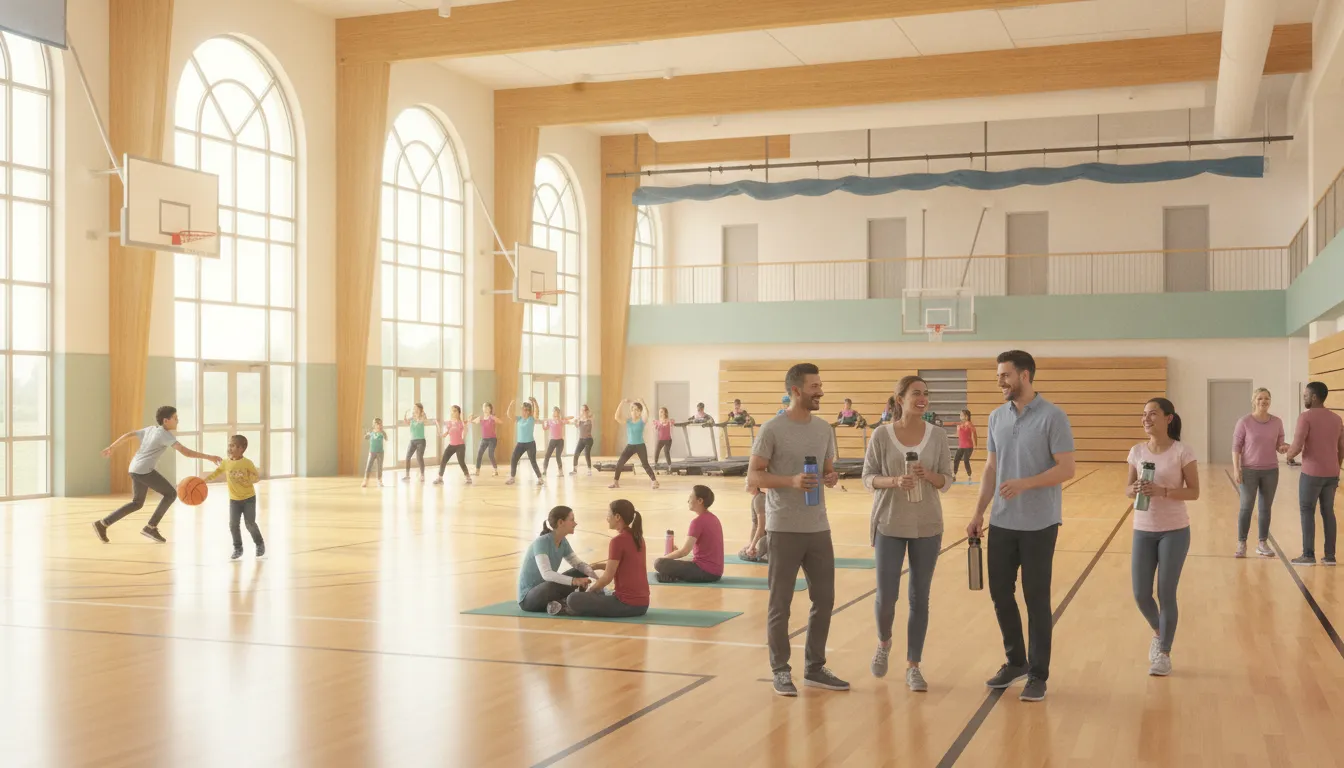
For media buyers and brand marketers planning a Portland media plan, the strongest placements are not always the largest or most obvious screens. Community and recreation centers create repeated opportunities to reach people during programs, practices, classes, and everyday visits, when audiences have the time and attention to notice and absorb a message. Unlike a billboard passed at highway speed, a placement inside a busy lobby, gymnasium, or pool facility is seen again and again by the same high-value local residents, building familiarity and recall over the course of a season.
All Points Media connects those dots with place-based media campaigns designed for the Portland DMA. With 30-plus years of experience and a nationwide network spanning more than 50 venue categories. All Points Media helps media buyers select the right community-center touchpoints, manage production and installation, and report on proof of performance.
For brands seeking high-dwell, locally relevant reach, community center advertising in Portland puts place-based media campaigns inside environments where residents live, work, and play. The approach can connect a message with families, active adults, youth, and spectators through a coordinated network of community-focused venues and touchpoints.
That combination of dwell time and routine attendance gives these venues value beyond simple foot traffic. The next consideration is how community centers create attentive audience conditions, and why those conditions matter when planning a Portland campaign.
Ready to reach Portland's community and recreation center audiences? Schedule a community center advertising strategy call with All Points Media today, and we'll map the venues that best fit your target market. Contact All Points Media at (503) 626-0669 to get started.
Why Community Center Advertising in Portland Reaches High-Dwell Audiences
Community centers give media buyers something many conventional placements cannot: repeated exposure in environments where people spend meaningful time. Visitors may arrive for a class, practice, fitness session, family activity, appointment, or community program, then remain on site while they participate, wait, or meet others. That dwell time creates room for a message to be noticed more than once and considered in context, rather than passed in a moment of transit.
For Portland campaigns, that setting supports a more precise connection between audience, geography, and daily routine. A brand can appear where local residents already live, work, and play, aligning the media environment with the communities it wants to reach. This is the role of place-based media campaigns: bringing the message into high-dwell, high-engagement venues instead of relying only on broad market coverage.
The engagement opportunity is also practical. Community centers bring together families, young people, working professionals, older adults, athletes, and program participants across different schedules and interests. A placement can therefore support local awareness while reaching several audience segments through one venue type. The value is not simply foot traffic. It is the combination of presence, relevance, and enough time for an audience to process the message.
Media buyers should also consider community centers as part of a broader venue strategy, not as isolated inventory. All Points Media reaches more than 50 venue categories and uses hyper-local targeting to help brands build a network around specific markets and audience priorities. That approach makes it possible to combine community center advertising in Portland with complementary place-based environments, creating consistent reach across the moments and locations that shape local behavior.
Execution matters as much as placement. A turnkey partner can help identify the right venues, coordinate installation, manage campaign details, and provide proof-of-performance reporting. Buyers evaluating community center advertising options should ask how the inventory fits the target audience, how often the audience returns, and how the campaign will be documented after launch.
Answer capsule: Community centers are high-dwell advertising environments because visitors spend time participating, waiting, and connecting rather than simply passing by. In Portland, media buyers can use these venues for relevant local exposure, then extend reach through All Points Media's 50-plus venue categories and hyper-local place-based media campaigns.
How Portland's Parks and Recreation Landscape Shapes Community Center Advertising
Portland's public recreation system matters to media buyers because it clarifies the difference between a civic partnership and a commercial media placement. Portland Parks & Recreation (PP&R) manages parks, programs, and community connections, but not every relationship with a public venue is an advertising opportunity. That distinction should shape how brands scope inventory, permissions, and activation timelines.
PP&R states that a Commercial Activity Permit allows an individual or organization to maintain an ongoing business within a PP&R park. The department identifies offerings such as classes, camps, and vending as examples of commercial activity in outdoor premises. For a media buyer, the practical takeaway is not that every advertisement requires this permit. It is that commercial activity at or around a public recreation property has an approval context that must be checked before a campaign is promised, installed, or activated.
Separate community partnerships from commercial inventory
PP&R's Community Partnership Program serves a different purpose. Its stated tools include grant funding, service partnerships, in-kind space-use support, and connections among partner organizations. It is not presented as a commercial advertising-sales channel. Brands pursuing sponsorship, community programming, or donated support may find that framework relevant, while a brand seeking recurring exposure to visitors needs a distinct commercial media path.
This is where a private place-based media network can add operational value. Rather than treating a public agency's partnership program as an advertising marketplace. Media buyers can identify eligible community and recreation venues, confirm the appropriate venue-side permissions, and build a campaign around contracted inventory. The approach protects the civic purpose of public programs while giving brands a clearer route to high-dwell environments.
Turn permitting context into a better media brief
A Portland brief should specify the venue type, placement, audience, campaign dates, creative format, installation responsibility, and approval owner. It should also distinguish a park-based activation from advertising inside a privately operated or independently managed community facility. That level of detail helps prevent a late-stage assumption that one permit, partnership, or venue contact covers every location in a multi-site plan.
For buyers comparing community center advertising options, the strongest plan pairs local market knowledge with a repeatable process for venue selection, approvals, installation, and reporting. All Points Media can help translate that Portland-specific context into place-based media campaigns that are practical to execute and aligned with each venue's operating environment.
Answer capsule: Portland's PP&R permitting and partnership frameworks are not interchangeable with commercial advertising inventory. Media buyers should verify venue permissions, separate civic partnerships from paid placements, and use an experienced place-based media partner to build a compliant, multi-venue community center campaign.
Placement Formats That Work in Community and Recreation Centers
Community and recreation centers give media buyers more than a single display opportunity. They offer a network of physical touchpoints that can align a message with the audience's activity, dwell time, and reason for visiting. For brands evaluating community center advertising in Portland, the right mix may include lobby placements, digital screens, rink boards, and other high-traffic inventory across the facility.
These environments support place-based media as a captive-audience channel. Visitors are not simply passing a roadside billboard at speed. They may be waiting for a class, watching a game, meeting family members, or moving through a facility as part of a recurring routine. That context gives the message more opportunities to be seen and remembered.
Lobby and high-traffic facility placements
Lobbies provide a practical starting point because they bring together multiple audience groups before and after activities. Depending on the venue, community centers may also include gymnasiums, ice rinks, fitness centers, and swimming pools. These facilities support programs such as hockey, figure skating, swimming, basketball, fitness classes, and camps, creating exposure across diverse audiences rather than a single narrow demographic.
Lobby signage and other static placements can support geographic awareness, seasonal offers, or a broader brand message. A campaign can also be planned around the facility's programming calendar, helping a brand reach families, athletes, spectators, and local residents in relevant moments. For campaigns connected to neighborhood programming or tournaments, place-based advertising for local events can extend that local relevance.
Digital screens for flexible creative
Digital screens add visibility in high-traffic areas while giving marketers more flexibility than a fixed placement. They can display dynamic video or static image creative, allowing a campaign to use motion, sequential messages, or different creative executions without replacing physical signage. Monthly updates also make digital inventory useful for rotating offers, seasonal priorities, and campaign phases.
For a Portland media plan, screen placement can complement static assets rather than replace them. A concise brand message may establish recognition in the lobby, while a digital unit reinforces a timely offer or directs visitors toward a next step. Creative should remain legible at the expected viewing distance and fit the pace of the facility.
Rink board advertising and captive attention
Ice rinks create a particularly clear captive-audience format. Rink board advertising places a brand in view of players and skaters on the ice, as well as spectators in the stands during practices and competitive events. The repeated visibility can support local brand recognition, especially when audiences return for weekly activities or follow a season-long schedule.
Together, these formats make captive audience advertising networks a useful planning model for community and recreation center campaigns. All Points Media can help evaluate the venue mix, match placements to the campaign objective, and coordinate the execution across selected locations.
| Placement format | Best suited for | Creative flexibility | Ideal audience context |
|---|---|---|---|
| Lobby and facility signage | Brand awareness and wayfinding | Static; swap on a schedule | Families, members, and visitors before and after activities |
| Digital screens | Offers, seasonal messages, and rotation | Dynamic video or static images; monthly updates | High-traffic corridors and shared gathering areas |
| Rink board advertising | Local brand recognition and community ties | Static, but reinforced by repeat visits | Players, skaters, and spectators at practice and events |
| Gym, fitness, and pool placements | Active-adult and youth audiences | Static and digital mixed | Recurring fitness classes, camps, and facility programs |
Answer capsule: Community and recreation center advertising can combine lobby signage, gymnasium and pool placements, digital screens, and rink boards. These formats reach diverse audiences during recurring, high-dwell activities. Digital creative adds flexibility, while rink boards and static displays reinforce brand visibility among players, families, and spectators in a captive local environment.
How to Plan a Place-Based Media Campaign Across Portland Venues
A strong Portland plan starts with the audience and the setting, not a generic list of available placements. Community centers can create high-dwell engagement because people encounter messages while they live, work, and play. The planning objective is to connect the right message with the venues, routines, and neighborhoods that matter to the campaign.
- Define the audience and geographic objective. Identify who the campaign must reach, which Portland neighborhoods matter, and whether the priority is broad metro awareness or concentrated reach around selected communities. A place-based approach supports hyper-local targeting across more than 50 venue categories, making it possible to build a venue mix around audience behavior rather than relying on one broad media environment. Use community center advertising in Portland when proximity, repeat visits, and local relevance are central to the brief.
- Map venue categories to audience behavior. Evaluate community and recreation centers alongside other suitable environments, then prioritize locations where the audience naturally spends time. Consider the differences between a family-oriented facility, a fitness setting, a pool, an ice rink, or a multipurpose center. The goal is not simply to collect impressions. It is to create repeated, contextually relevant exposure in places that support the campaign's message and timing.
- Match creative to the physical experience. Select formats and messaging that work in the selected venues. A short, highly legible message may suit a quick lobby encounter, while a more visual execution can work where visitors have longer dwell time. Build a flexible creative plan so messaging can be updated as the campaign changes, without losing consistency across the network.
- Confirm access, ownership, and operating requirements. Separate commercial media placement from public partnership or program activity. Portland Parks & Recreation describes its Commercial Activity Permit as applying to business endeavors such as classes, camps, or vending in outdoor premises, while its Community Partnership Program focuses on grants, service partnerships, and space-use support. Those distinctions make early venue and approval conversations essential. Confirm who controls the placement, what permissions apply, and what production specifications must be met before committing media dollars.
- Build a turnkey execution and measurement plan. Establish responsibilities for strategic venue selection, creative production, installation, campaign management, and proof-of-performance reporting. A turnkey partner can streamline those handoffs and help maintain consistency across multiple locations. Review the full scope of place-based media campaigns before launch, including the reporting needed to evaluate delivery and inform the next Portland activation.
Answer capsule: Planning community center advertising in Portland requires more than choosing facilities. Define the audience, map venue behavior, select suitable formats, verify access requirements, and assign execution and reporting responsibilities. A coordinated, turnkey plan helps media buyers connect high-dwell local environments with measurable campaign objectives.
Building a Geo-Targeted Portland Community Center Advertising Strategy
A strong Portland community center plan begins with geography, not a generic audience segment. Map the neighborhoods, travel patterns, and venue types that matter to the campaign, then select facilities where the intended audience already spends meaningful time. This approach makes community center advertising options part of a broader media plan rather than an isolated placement.
All Points Media can extend that strategy across more than 50 venue categories, enabling hyper-local targeting around community and recreation centers while preserving the scale of a broader place-based media campaign. The practical question is not simply whether a center has available inventory. It is whether the location, audience, dwell time, and surrounding market reinforce the campaign objective.
Start with Portland market priorities
Define the geographic role of community centers within the Portland DMA. A neighborhood-focused healthcare, retail, or public-service campaign may need concentrated coverage near selected residential clusters. A regional brand may use a wider set of facilities to build repeated exposure across multiple communities. Separate priority venues from expansion venues, and align each group with flight dates, creative versions, and frequency expectations.
Community centers can complement traditional OOH by adding proximity and context. Billboards and transit placements can establish broad market awareness, while recreation facilities provide additional contact points in environments associated with daily routines, family activities, and local participation. The combination can help a media plan move from market-level visibility to neighborhood-level relevance without treating the channels as interchangeable.
Coordinate execution across selected venues
Venue selection should account for the specific touchpoints available at each facility, the expected audience, and the campaign's creative requirements. A consistent message may work across a network, while localized creative can reflect nearby services, events, or offers. Confirm placement specifications and operational requirements early, especially when a plan includes multiple facility owners or public-sector locations.
Turnkey execution reduces the coordination burden for media buyers. All Points Media supports strategic venue selection, installation, campaign management, and proof-of-performance reporting, helping connect the approved plan to real-world delivery. That matters when a Portland strategy spans several facilities and needs one accountable partner for implementation and documentation.
Answer capsule: A geo-targeted Portland community center strategy combines neighborhood-level venue selection with the reach of a broader DMA plan. By pairing high-dwell recreation environments with traditional OOH and using turnkey coordination for installation and reporting. Media buyers can build place-based media campaigns that are locally relevant, scalable, and easier to manage.
How Media Buyers Measure Community Center Advertising Performance
Performance reporting should connect venue presence to the decisions a media buyer needs to make next. For community center advertising in Portland, that means evaluating more than whether a message was installed. A useful measurement plan documents where the campaign ran, which audience conditions surrounded the placement. How long people were likely exposed, and what adjustments can improve the next delivery period.
Start with verifiable delivery
First, establish a clear record of campaign delivery. Track the participating facilities, placement type, flight dates, creative version, and installation status. For digital screens, retain the scheduled creative rotation and update history. For static placements, document the venue and display location with proof-of-performance materials. This creates an auditable chain between the media plan and what appeared in-market.
Venue context matters because community and recreation centers bring together different use cases, including fitness, swimming, skating, sports, classes, and family programming. Public facility advertising programs describe these locations as high-traffic environments serving diverse audiences, not as a single uniform media setting. That distinction helps buyers compare placements by audience relevance rather than treating every impression as interchangeable. Community center advertising options can therefore be evaluated by facility role, traffic pattern, and campaign objective.
Evaluate dwell-time engagement and audience fit
Community center audiences often spend meaningful time moving through lobbies, waiting areas, courts, pools, fitness spaces, or rinks. Measurement should reflect those conditions. Review the expected dwell environment, recurring program schedule, peak attendance periods, and the relationship between the message and the activity taking place nearby. A brand seeking family reach may value repeated exposure around youth programming, while a local service provider may prioritize adult fitness or weekday community programming.
Audience verification should combine venue information with the campaign's geographic and demographic objectives. Confirm that selected facilities align with the intended Portland-area neighborhoods, then compare delivery across locations. If one venue consistently offers stronger audience fit or more useful engagement conditions, that evidence can guide budget shifts without relying on unsupported response claims.
Use reporting to optimize the next flight
Optimization can involve changing the venue mix, adjusting creative rotation, refining daypart coverage, or extending the strongest placements. Digital formats may allow more frequent creative updates, while static and rink-based formats require more deliberate production and installation planning. The goal is not to force every placement into the same measurement model. It is to identify what each environment contributes and make the next plan more precise.
A turnkey partner can streamline this process by coordinating strategic venue selection, installation, campaign management, and performance reporting in one workflow. Place-based media campaigns are strongest when the reporting is specific enough to support a real buying decision: renew, revise, expand, or reallocate.
Answer capsule: Media buyers measure community center advertising through verified placement delivery, venue and audience fit, dwell-time conditions, creative exposure opportunities, and documented optimization recommendations. In Portland, reporting should show which facilities and neighborhood environments supported the campaign. Then translate those observations into smarter venue selection, creative updates, and budget decisions for the next flight.
Ready to build a measurable Portland community center advertising campaign? Talk to All Points Media today and get a venue plan tailored to your target audience. Contact All Points Media at (503) 626-0669 to start your place-based media campaign.
Frequently Asked Questions
How can I advertise at community centers in Portland?
Start by defining the Portland neighborhoods, audience, and venue environments that matter to the campaign. A place-based media partner can then identify suitable community and recreation centers. Recommend formats such as digital screens or rink boards, coordinate placement, and manage installation and performance reporting through one campaign plan.
Where can I find community message boards in Portland to post an ad?
Message-board availability varies by facility and operator, so confirm permission and posting requirements directly with each location. For a scalable media buy, consider managed placements inside high-traffic community and recreation facilities rather than relying only on individually posted notices. This provides a more consistent schedule, format, and geographic plan.
What is a commercial activity permit for Portland Parks & Recreation?
Portland Parks & Recreation describes a Commercial Activity Permit as authorization for an individual or organization to maintain an ongoing subsidiary business within a PP&R park. Its published examples include business activities such as classes, camps, or vending on outdoor premises. Review the current requirements with PP&R before treating a permit as approval for advertising placement: Portland Parks & Recreation commercial activity guidance.
Does Portland Parks & Recreation allow commercial advertising in its community centers?
Do not assume that a general permit or partnership program authorizes commercial advertising. PP&R's Community Partnership Program focuses on grants, service partnerships, in-kind space use, and community connections, while advertising permissions depend on the specific facility and arrangement. Confirm inventory, eligibility, creative rules, and approval requirements with the facility or an authorized media partner.
Are there opportunities for place-based advertising in Portland recreation centers?
Yes, opportunities can include digital displays, lobby placements, fitness-area inventory, pool environments, and rink boards where available. The strongest format depends on dwell time, visibility, audience mix, and campaign objective. A managed network can combine suitable venues across Portland while keeping the message, flight dates, and reporting consistent.
Ready to Plan Your Portland Community Center Campaign?
Community center advertising in Portland can deliver a high-dwell, neighborhood-level reach that standard outdoor placements often miss. When you work with All Points Media, you get a full-service partner that handles strategic venue selection, production, nationwide installation, and proof-of-performance reporting through a single campaign plan. That turnkey approach frees your team to focus on creative and strategy instead of logistics.
Start with a conversation about your goals, your target neighborhoods, and the audience mix you need to reach. All Points Media can recommend the right community-center placements, budget them realistically, and map them to the Portland venues most likely to move your metrics. To schedule your community center advertising strategy call, contact All Points Media today at (503) 626-0669.