
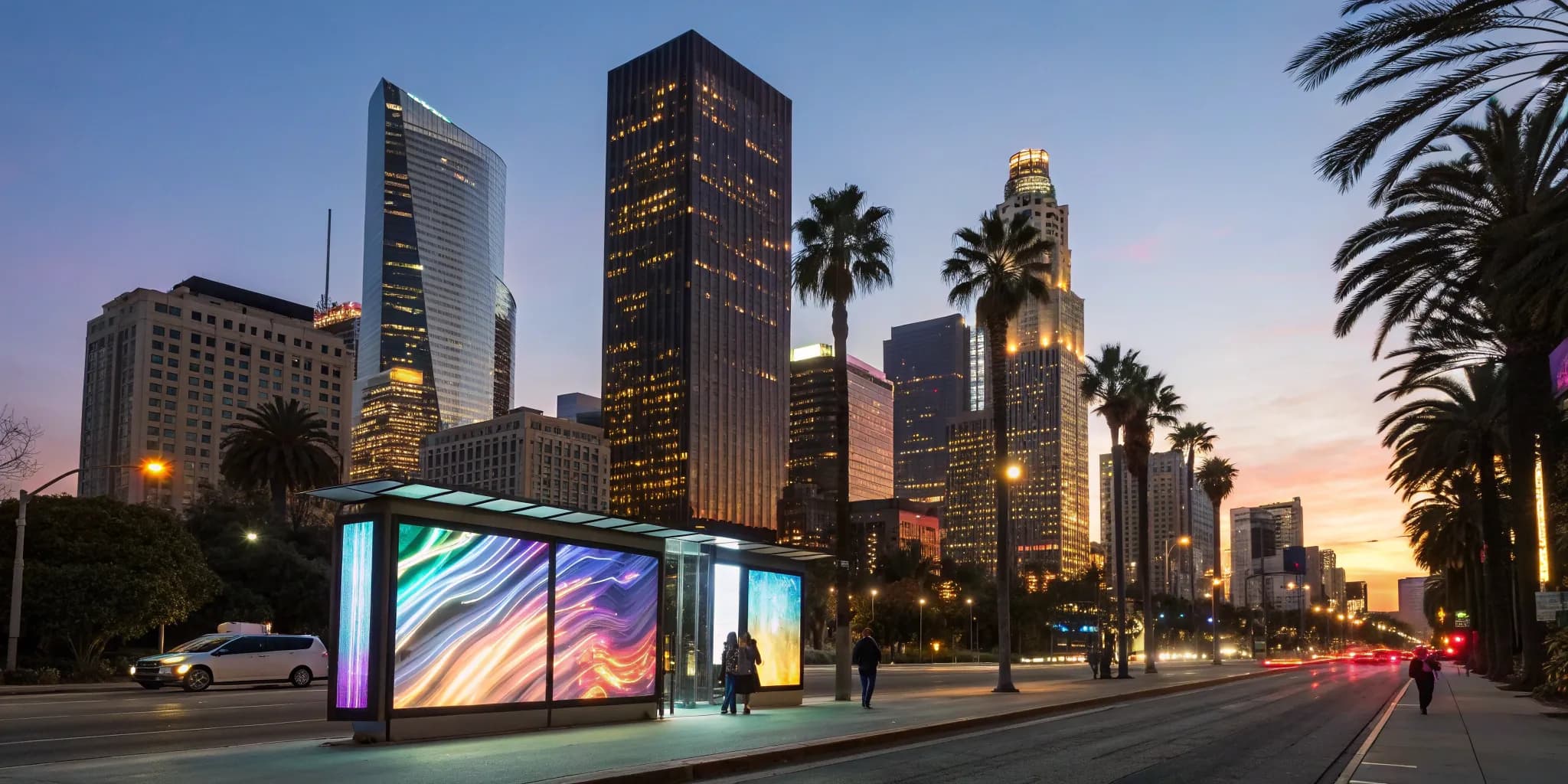
Planning an ad campaign in Los Angeles can feel like shouting into a hurricane. The market is massive, saturated, and incredibly expensive. Billboards on the 405 and bus wraps downtown are seen by millions, but how many of those impressions actually connect with the right person? It’s easy to spend a fortune and still feel like your message is getting lost in the noise. This is where a smarter strategy comes into play. The solution isn't to shout louder, but to speak more clearly in the right places. By focusing on alternative out of home advertising in Los Angeles, you can bypass the clutter and engage with your audience in environments where they are genuinely receptive.
Key Takeaways
- Choose Context for Deeper Connection: Instead of focusing on high-traffic roads, place your ads in high-dwell-time environments like gyms, cafes, and waiting rooms. This strategy ensures your message reaches an engaged audience when they are relaxed and receptive, not just driving by.
- Build a Custom Network for Better Targeting: A single billboard speaks to everyone and no one. A more effective approach is to create a custom network of venues that align with your specific audience's lifestyle, allowing you to tailor your message and connect with the right people in the right places.
- Make Your Campaign Accountable: Bridge the gap between your physical ads and digital results. Use tools like QR codes and custom URLs to track engagement, and work with a partner who provides clear proof-of-performance reporting to validate your ad spend and measure its true impact.
What is Alternative Out-of-Home Advertising in Los Angeles?
When you think of outdoor advertising in Los Angeles, your mind probably jumps to the massive billboards lining the Sunset Strip or the bus wraps crawling along the 405. But that’s only a small piece of the puzzle. Alternative out-of-home (OOH) advertising moves beyond these traditional formats to connect with people in more targeted and meaningful ways. It’s about reaching Angelenos not just when they’re in transit, but where they actually spend their time—at the gym, in a doctor's waiting room, at their favorite cafe, or on a college campus.
This approach is especially powerful in a city as sprawling and diverse as LA. Instead of shouting a single message at millions of drivers, alternative OOH lets you whisper the right message to the right person at the right time. It’s a strategic way to cut through the noise and create genuine connections in the places where daily life happens. By focusing on context and environment, these campaigns deliver your brand’s message when your audience is most relaxed, receptive, and ready to engage. This is the core of place-based media, a strategy that transforms everyday locations into powerful communication channels that traditional billboards just can't match for relevance.
The Power of Place-Based Media
Place-based media is all about context. It’s the art of putting your message in a physical environment where it feels natural and relevant to the audience there. Think about it: an ad for a new protein shake hits differently when you see it on a screen at your local fitness center versus on a billboard you speed past on the freeway. In Los Angeles, a global hub for culture and business, this strategy allows for incredible precision. You can target specific demographics by choosing venues they frequent, ensuring your message resonates deeply. This method helps you build authentic brand interactions and generate real excitement by becoming part of your audience's daily routine.
Digital vs. Traditional: What's the Difference?
The line between digital and traditional OOH can feel a bit blurry. Traditional OOH includes static formats like printed posters and classic billboards. Digital OOH (DOOH) brings screens and dynamic content into the mix, from massive digital billboards to screens in elevators. While digital billboards boast impressive reach, alternative OOH is defined by its strategic placement, not just its technology. An alternative campaign might use printed posters in a network of coffee shops or dynamic screens in medical clinics. The key difference is the focus on dwell time and audience mindset. Our digital solutions, for example, are placed in environments where people are waiting and looking for a distraction, making them far more impactful than a fleeting digital ad seen from a car.
Why LA's Unique Landscape is a Goldmine for Creative Ads
Los Angeles is a city constantly on the move, but it’s also a city of distinct villages. From the laid-back vibe of the beach cities to the hustle of Downtown, each neighborhood has its own unique culture. This makes LA a perfect playground for creative, alternative OOH campaigns. You can tailor your creative and messaging to connect with the specific communities you want to reach. Placing ads near major attractions like stadiums and theme parks allows you to capture the attention of both locals and the millions of tourists who visit each year. Because people in LA spend so much time out of their homes, you have countless opportunities to meet them where they are, making your brand an authentic part of the city’s vibrant landscape.
Which Alternative OOH Formats Work Best in LA?
Los Angeles isn’t just a city; it’s a sprawling collection of diverse communities, each with its own rhythm. For advertisers, this means a one-size-fits-all approach rarely works. While billboards on the 405 have their place, the real opportunity lies in connecting with Angelenos during their daily routines. Alternative OOH advertising moves beyond the freeway to meet people where they live, work, and play—in moments when they’re relaxed, engaged, and open to your message.
The most effective format for your brand depends entirely on who you’re trying to reach and what you want to achieve. Are you targeting health-conscious professionals in Santa Monica or families in the San Fernando Valley? Do you want to drive foot traffic to a new restaurant or build brand awareness for a new streaming service? The beauty of place-based media is its flexibility. By choosing the right format, you can place your message in a context that feels natural and relevant, making it far more memorable than a passing glance on a busy street. From transit hubs to local gyms, the key is to find the spaces where your audience spends their time.
Reaching Commuters at Transit Hubs
Despite its reputation as a car city, millions of Angelenos rely on public transportation every day. This creates a massive opportunity for brands to connect with a captive audience. Transit advertising isn't just about wrapping a bus; it's about engaging people throughout their entire journey. Think digital screens in Metro stations, posters at bus shelters, and displays inside train cars. These are high-dwell-time environments where commuters are actively looking for a distraction. An ad placed in a transit hub can capture the attention of a diverse audience as they wait, travel, and move through the city, offering repeated exposure day after day. It’s a powerful way to build brand recognition and stay top-of-mind with a broad segment of the population.
Engaging Audiences in Everyday Venues
What if you could reach your audience when they’re pursuing their hobbies, running errands, or taking a coffee break? That’s the power of advertising in everyday venues. Placing ads in locations like fitness centers, cafes, medical offices, and community centers allows you to connect with people in a trusted, low-clutter environment. A message about a new protein shake resonates differently inside a gym than it does on a billboard. This type of contextual advertising feels less like an interruption and more like a helpful suggestion. By strategically selecting venues that align with your target demographic’s lifestyle, you can ensure your message is seen by the right people at the right time, driving deeper engagement and recall.
Blending into the Urban Landscape
In a city as visually rich as Los Angeles, the most effective ads often feel like a natural part of the scenery. Formats like street furniture advertising—ads on benches, newsstands, and kiosks—integrate seamlessly into the urban environment. These placements are strategically located in high-traffic pedestrian areas, from busy downtown streets to popular shopping districts like The Grove. By placing ads near iconic attractions, sports venues, and local hotspots, brands can reach both residents and the millions of tourists who visit LA. The goal is to create a presence that complements the neighborhood's vibe, making your brand a memorable part of the Los Angeles experience for everyone who passes by.
Making a Splash with Experiential Marketing
Los Angeles is a city that loves a spectacle, making it the perfect stage for experiential marketing. This format goes beyond static ads to create immersive and interactive brand moments. Think pop-up installations, brand activations at local events, or guerrilla marketing campaigns that generate buzz. These experiences are designed to be memorable and shareable, encouraging people to post on social media and spread the word organically. In a market saturated with traditional advertising, a creative experiential campaign can cut through the noise and forge a genuine emotional connection with your audience. It’s a chance to let people interact with your brand in a fun and unforgettable way, creating lasting impressions that drive loyalty.
How Much Does Alternative OOH Cost in Los Angeles?
Figuring out the budget for an out-of-home campaign in Los Angeles can feel like a huge task. It’s a sprawling, diverse city, and the costs can vary just as much as the neighborhoods. While a massive billboard overlooking the 405 will come with a premium price tag, alternative and place-based OOH advertising offers a more flexible and targeted way to invest your ad dollars. The final cost isn’t just about securing a physical space; it’s about the quality of the audience you’re reaching and the context of their environment.
Unlike traditional OOH, where you pay for broad visibility, alternative OOH pricing is tied to specific venues and the audiences they attract. Think about it: you’re not just buying ad space, you’re buying access to people during moments in their day when they’re most receptive—at the gym, in a doctor's office waiting room, or grabbing a coffee. The price reflects the value of that focused attention. Your total investment will depend on several key factors, including the types of venues you choose, the scale of your campaign, and the ad formats you use.
Key Factors That Influence Your Budget
When planning your alternative OOH campaign, your budget will be shaped by a few core components. First, consider the venue and its audience. Placing ads in a network of exclusive fitness centers will naturally have a different cost than a campaign in local community centers. Los Angeles is the second-largest advertising market in the country, so location plays a huge role. A campaign targeting professionals in Santa Monica will be priced differently than one reaching families in the San Fernando Valley. The scale and duration of your campaign are also critical, as is the creative format itself. Static posters, digital screen takeovers, and custom branded installations all come with different production and placement costs.
A Quick Cost Comparison of Different Formats
To give you a general idea, let’s look at some typical monthly costs for traditional OOH in LA. A single billboard can range from $2,000 to over $25,000. Bus shelter ads might run between $1,500 and $3,500, while an ad inside a bus could be as low as $20. These formats are priced for mass exposure. Alternative OOH works differently. Instead of one large spend, your budget might be distributed across a network of many targeted, lower-cost placements. For the price of one billboard, you could create a custom network of ads in 50 cafes, 20 gyms, and 10 medical offices that directly align with your target demographic. This approach trades broad, passive impressions for deeper, more meaningful engagement.
How to Get the Most from Your Ad Spend
Maximizing your budget isn’t about finding the cheapest placement; it’s about making the smartest investment. Start by clearly defining your campaign goals. Are you driving awareness, promoting a local event, or encouraging product trials? Your objective will guide your venue selection. Instead of thinking only about zip codes, focus on the mindset and daily journey of your ideal customer. Where do they spend their time when they aren't in their car? The best way to ensure your budget is working hard for you is to partner with a specialist who can help you identify the right mix of venues, negotiate placements, and build custom networks that align perfectly with your strategy. This strategic support helps you avoid wasted spend and ensures your message connects with the right people at the right time.
Which Formats Drive the Best Results for LA Campaigns?
In a city as sprawling and diverse as Los Angeles, the most effective advertising formats are the ones that connect with people where they are, mentally and physically. While traditional options like billboards on the 405 and bus ads are everywhere, they often become part of the background noise. The real magic happens when you move beyond the expected. Alternative and place-based media formats are designed to capture attention in moments when people are genuinely receptive. Instead of shouting at drivers in traffic, these campaigns start a conversation in the places Angelenos frequent every day, from their local gym to their favorite coffee shop. The key isn't just to be seen, but to be seen in the right context.
Why Dwell Time and Engagement Matter
In Los Angeles, attention is the ultimate currency. While commuters might see the same billboard dozens of times, that repetitive exposure doesn't guarantee engagement. True connection happens during moments of pause. This is where dwell time—the amount of time an audience spends in one location—becomes your campaign's greatest asset. Think about the waiting room at a doctor's office, the time spent on a treadmill at the gym, or the lunch break at a cafe. In these high-dwell environments, your audience isn't just passing by; they're present and looking for something to occupy their attention. This captive audience is more likely to absorb, consider, and remember your message, turning a simple ad placement into a meaningful brand interaction.
Pinpointing Your Audience with Hyper-Local Targeting
One of the biggest hurdles in a market as vast as LA is audience fragmentation. How do you reach your specific customer amid millions of people? This is where hyper-local targeting changes the game. Instead of a broad, city-wide approach, alternative OOH allows you to focus your efforts on the specific neighborhoods and venues your target demographic frequents. You can place ads for a new health food brand in fitness centers and yoga studios in Santa Monica, or promote financial services in the business districts of Downtown LA. This strategy allows you to build a custom advertising network that speaks directly to a community, ensuring your message is not only seen but is also highly relevant to the people seeing it.
How to Measure Your Campaign's Performance
For years, measuring the direct impact of OOH advertising felt like a guessing game. Thankfully, that's no longer the case. Today’s alternative OOH campaigns can be tracked with surprising accuracy. By using tools like geofencing and mobile device data, you can see how exposure to your ad influences real-world actions, such as visits to your store or website. For digital place-based screens, you can gather precise metrics on impressions and audience demographics, similar to an online campaign. This data provides clear proof of performance, allowing you to understand your ROI and refine your strategy for even better results on your next campaign.
What's Next? AR and Sustainable Advertising
The world of OOH is constantly evolving, and Los Angeles is often at the forefront of innovation. The next wave of advertising is focused on creating truly interactive and immersive experiences. Technologies like Augmented Reality (AR) are turning static ads into dynamic engagements that can captivate audiences in unforgettable ways. Imagine a poster in a cafe that comes to life through a smartphone camera, revealing a special offer or a product demo. At the same time, there's a growing demand for sustainability in advertising. Brands are increasingly looking for eco-friendly materials and partners who prioritize environmental responsibility, ensuring their campaigns resonate with the values of modern consumers.
What Are the Common Challenges with Alternative OOH in LA?
Los Angeles is an incredible market for out-of-home advertising, but its size and diversity also present some unique hurdles. For media buyers and brands looking to make an impact, it’s not just about finding a spot to place an ad; it’s about navigating a complex environment to ensure your message is seen, measured, and well-received. Being aware of these challenges ahead of time is the first step to building a campaign that truly connects with Angelenos.
The main obstacles you’ll encounter fall into a few key areas. First, there’s the intricate network of local rules and permits that can feel like a maze. Then, you have the sheer competition for high-quality placements in a city saturated with advertising. Many advertisers also struggle with tracking the real-world performance of their campaigns, a stark contrast to the clear-cut analytics of digital ads. Finally, it’s crucial to consider how your ads will be perceived by the public. A successful campaign adds value to a community, it doesn’t just add to the noise. Let’s break down each of these challenges and how you can approach them strategically.
Understanding LA's Permits and Regulations
Los Angeles isn’t a single entity when it comes to advertising rules. The city is a patchwork of municipalities and neighborhoods, each with its own set of regulations and permit requirements. What’s permissible in Silver Lake might be off-limits in Beverly Hills. This complex web of local ordinances means that ensuring compliance for an OOH campaign can quickly become a full-time job.
For advertisers, especially those planning campaigns across different parts of the city, this can be a time-consuming and frustrating process. Failing to secure the right permits can lead to fines or the removal of your ads, wasting valuable budget and time. This is where working with an experienced partner becomes essential. A team that understands the local permitting landscape can handle the administrative legwork, ensuring your campaign runs smoothly and legally from day one.
Securing the Best Ad Placements
In a media-heavy market like Los Angeles, competition for prime advertising real estate is fierce. Everyone wants the high-visibility billboard along the 405 or the digital screen at The Grove. This high demand not only drives up costs but also makes it difficult to find placements that haven’t already been claimed by major national brands. The challenge isn’t just finding an available spot—it’s finding the right spot that reaches your specific audience without getting lost in the clutter.
This is why a strategic shift toward place-based media can be so effective. Instead of competing for the same traditional OOH locations, you can connect with consumers in environments where they spend significant time and are more receptive to messaging. Think fitness centers, medical offices, cafes, and community hubs. These venues offer direct access to targeted demographics in a less saturated setting, allowing your brand’s message to stand out.
Overcoming Measurement Hurdles
One of the longest-standing challenges in the OOH industry is measurement. Unlike digital advertising, where every click and impression is tracked, assessing the effectiveness of a physical ad can feel ambiguous. How do you truly know how many people saw your ad and, more importantly, what action they took afterward? For media buyers held accountable for ROI, this lack of concrete data can be a significant drawback.
Modern alternative OOH campaigns, however, are closing this gap. By integrating digital tools like QR codes, unique promo codes, and dedicated landing pages, you can create a direct link between your physical ad and online engagement. Furthermore, place-based media offers clearer audience metrics based on venue foot traffic and visitor demographics. A partner that provides comprehensive proof-of-performance reporting—complete with photos and affidavits—gives you the tangible evidence needed to validate your investment and measure real-world impact.
Considering Public Perception and Your Brand's Impact
Today’s consumers are more discerning than ever about advertising. In a city like LA, there’s a fine line between a memorable ad and one that contributes to visual pollution. Brands must be mindful of public perception, ensuring their campaigns resonate positively with the community instead of being seen as an unwelcome intrusion. A poorly placed or irrelevant ad can do more harm to your brand’s reputation than good.
This is where the context of alternative OOH truly shines. Placing ads in relevant, everyday environments feels less like an interruption and more like a helpful suggestion. For example, a health-conscious snack brand advertising in a gym or a financial services company placing ads in an office building lobby feels natural and appropriate. This thoughtful approach to placement shows respect for the consumer’s environment and helps build a positive brand association. It’s about becoming part of the community fabric, not just advertising to it.
How to Maximize Your Alternative OOH Success in Los Angeles
Running a successful alternative OOH campaign in a city as dynamic as Los Angeles requires more than just finding a great location. It’s about a thoughtful strategy that combines standout creative, smart data, and seamless execution. When you get these pieces right, you can cut through the noise and connect with Angelenos in the moments that matter most. Here’s how to set your campaign up for success from the start.
Design Creative That Stops People in Their Tracks
Los Angeles is a visually saturated market. To make an impact, your creative needs to be bold, clear, and instantly understandable. Since you’re reaching people in specific environments—like a gym, a doctor’s office, or a cafe—your design should feel at home yet still capture attention. Think less about cramming in information and more about sparking curiosity with a compelling image and a concise headline. Remember, you have a few seconds to make an impression. Use high-contrast colors and easy-to-read fonts to ensure your message is legible from a distance. The goal is to create an ad that feels like a natural part of the environment while being memorable enough to stick with someone long after they’ve left.
Use Data to Personalize Your Message
The real power of place-based media is its ability to reach specific audiences. Instead of a generic message for everyone, you can tailor your creative based on the data and demographics of a particular venue. An ad in a high-end salon in Beverly Hills should look and feel different from one in a family-friendly restaurant in the Valley. Use audience insights to inform your messaging, ensuring it resonates with the people you’re trying to reach. This level of personalization makes your ad feel more relevant and less like an interruption. By leveraging data-driven targeting, you can speak directly to the lifestyles, interests, and needs of consumers in each unique location, making your campaign far more effective.
Find the Right Media Partner
Navigating LA’s advertising landscape can be complex, which is why working with the right partner is so important. A great partner does more than just sell you ad space; they act as an extension of your team. They should provide strategic guidance on venue selection, help you build a custom network that aligns with your campaign goals, and handle all the logistics of printing, installation, and management. Look for a full-service partner who offers complete accountability and transparent reporting. This collaboration ensures your campaign runs smoothly and allows you to focus on the bigger picture while they manage the details on the ground.
Connect Your OOH and Digital Campaigns
Your OOH campaign shouldn’t exist in a silo. The most effective strategies integrate physical ads with digital efforts to create a cohesive brand experience. You can use your place-based ads to drive online action through QR codes, custom URLs, or social media callouts. Even better, you can measure the real-world impact of your OOH exposure by using geofencing to track subsequent website visits or app downloads from people who were near your ads. This connection not only amplifies your message across multiple channels but also provides valuable data to prove your campaign’s performance and demonstrate a clear return on investment.
Related Articles
- Out of Home Place Based Media Advertising
- Alternative OOH Advertising - Digital Out of Home Advertising
- LA Zoo Ice Cream - Digital Out of Home Advertising
- LA Zoo Christmas Tree - Digital Out of Home Advertising
- 1 - Digital Out of Home Advertising
Frequently Asked Questions
My campaign needs broad reach. Isn't alternative OOH too niche for that? It's a common misconception that targeted means small. Think of it as building your reach with precision. Instead of shouting at everyone from a single billboard, you're having hundreds of focused conversations in venues all over the city. For the cost of one or two traditional placements, you can build a custom network of dozens of locations that directly align with your audience's lifestyle. This creates a powerful, cumulative effect that feels both personal and widespread, driving deeper recall than a passing glance on the freeway.
How do I know which venues are right for my brand? The best starting point is to think about your ideal customer's daily journey, outside of their commute. Where do they go to de-stress, run errands, or socialize? A great media partner will work with you to map this out and then match your goals to their network of venues. They can provide demographic and psychographic data for different locations, helping you choose the gyms, medical offices, or cafes where your message will feel most relevant and welcome.
What if my creative isn't a standard poster size? Can you handle custom installations? Absolutely. One of the most exciting aspects of alternative OOH is the creative freedom it offers. While standard posters and digital screens are effective, we often work with brands to create unique experiences that go beyond the frame. This could mean anything from branded coffee sleeves in a network of cafes to custom wall graphics in a fitness center. The goal is to find a solution that fits the environment naturally while making your brand unforgettable.
How do you prove that my ads were actually installed correctly and on time? Transparency is everything. For any campaign, you should expect to receive comprehensive proof-of-performance reporting. This typically includes a detailed list of every location where your ads were placed, along with time-stamped photos of each installation. This documentation gives you complete confidence that your campaign was executed exactly as planned, providing tangible evidence of your investment at work.
How long does it take to get a campaign up and running? The timeline can vary depending on the scale and complexity of your campaign, but it's often faster than you might think. Once we've finalized the strategy and venue list, the process moves into production and logistics. A straightforward campaign using standard formats can often be launched within a few weeks. For more custom projects, we'll build a timeline that ensures every detail is perfect. The key is having a partner who manages the entire process, from printing to installation, so you can stay focused on your overall marketing goals.